
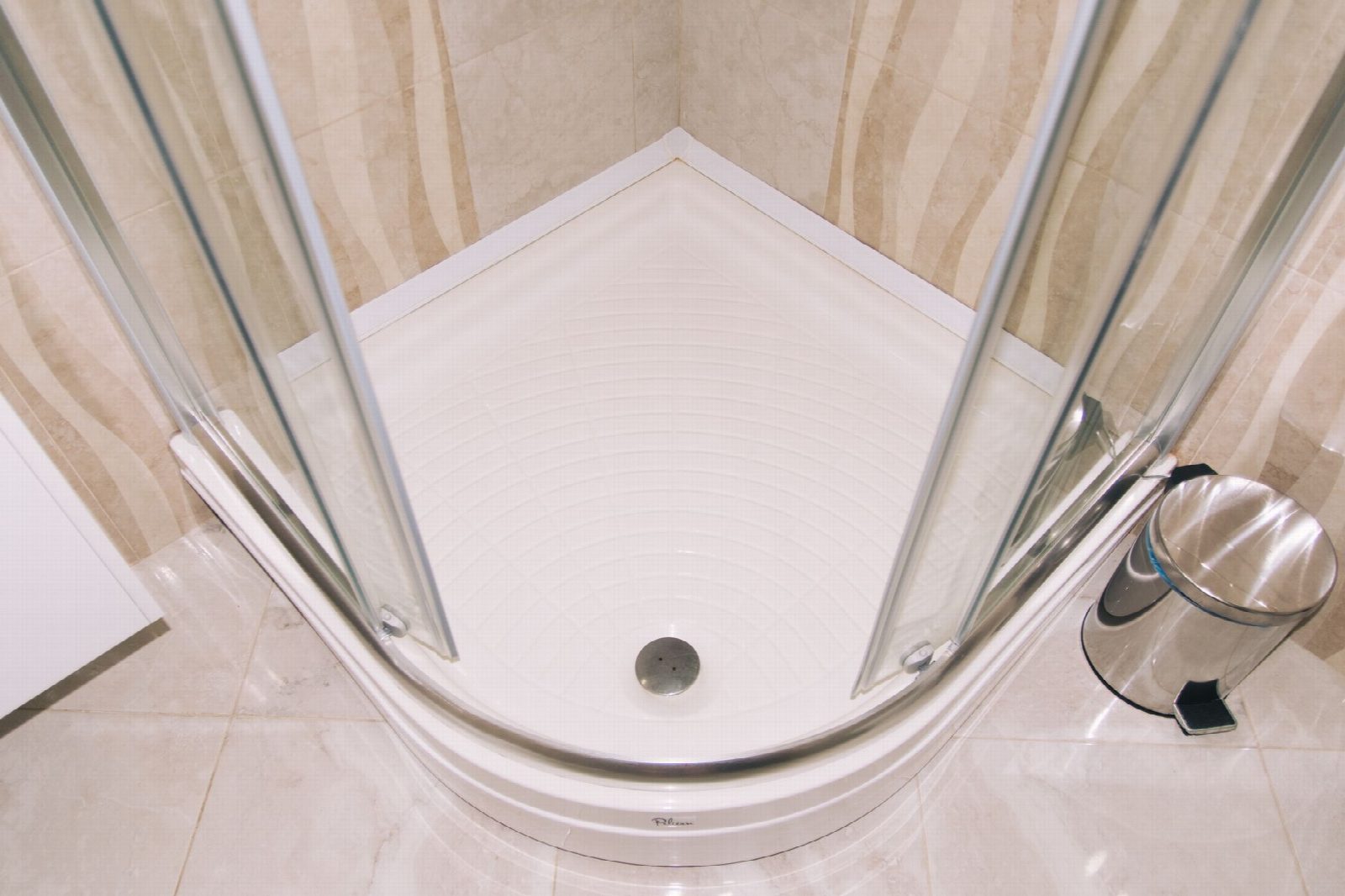
We're a cleaning company working across Norfolk and Suffolk, and bathrooms are where we're asked for help most often. If you're looking for bathroom mould cleaning help, the black speckling along your sealant and grout lines is usually damp air that's had nowhere to go, and it comes back unless you deal with both the mould and the moisture behind it.
Why mould turns up in the bathroom first
A hot shower puts a lot of water vapour into a small room. That vapour settles on the coldest surfaces it can find, which is usually the tiles, the window reveal, the ceiling above the shower and the corner behind the door. Grout and silicone sealant are slightly porous, so the moisture sits in them rather than drying off like it does on glass.
Mould spores are already in the air in every home. They only become a problem when they find damp and something to feed on, and in a bathroom that's soap residue, shampoo splash and skin cells sitting in the damp grout. That's why the worst patches are nearly always low down in the shower tray corners and along the top of the bath.
The difference between condensation mould and a leak
Condensation mould spreads over a wide area in thin black speckles, usually on cold outside walls, around windows and up in the ceiling corners. A leak behind the wall or under the bath tends to show up as one defined patch that stays damp to the touch, sometimes with staining, bubbling paint or a musty smell that doesn't shift after you've aired the room. If a patch stays wet when the room has been dry and ventilated for a day or two, get a plumber to look before anyone cleans it, because cleaning won't fix a pipe.
What actually works when you clean it
Wipe a bleach spray across black mould and the colour disappears in minutes, which feels like a result. It usually isn't. The pigment has gone but the growth in the pores of the grout and sealant is still there, so it reappears within a few weeks.
What works is contact time. The product needs to sit on the mould long enough to do its job, which means spraying, waiting, then agitating the grout lines with a brush rather than a cloth. Grout is textured, and a flat cloth skates over the top of it. A stiff narrow brush gets into the channel where the growth actually is.
It's also worth knowing what you're cleaning. Grout can be scrubbed hard and treated. Silicone sealant can't be rescued once mould has grown right through it, no matter what you use. If the bead has gone grey or black all the way through and scrubbing makes no difference, it needs cutting out and replacing. That's a job for a fitter, not a cleaner.
Don't mix products, and ventilate while you work
Never combine bleach-based products with anything containing acid, which includes most limescale removers and descalers. The combination gives off chlorine gas. Use one, rinse thoroughly, dry the surface, then use the other if you need to. Open the window and run the extractor the whole time you're working, and wear gloves.
Stopping it coming back
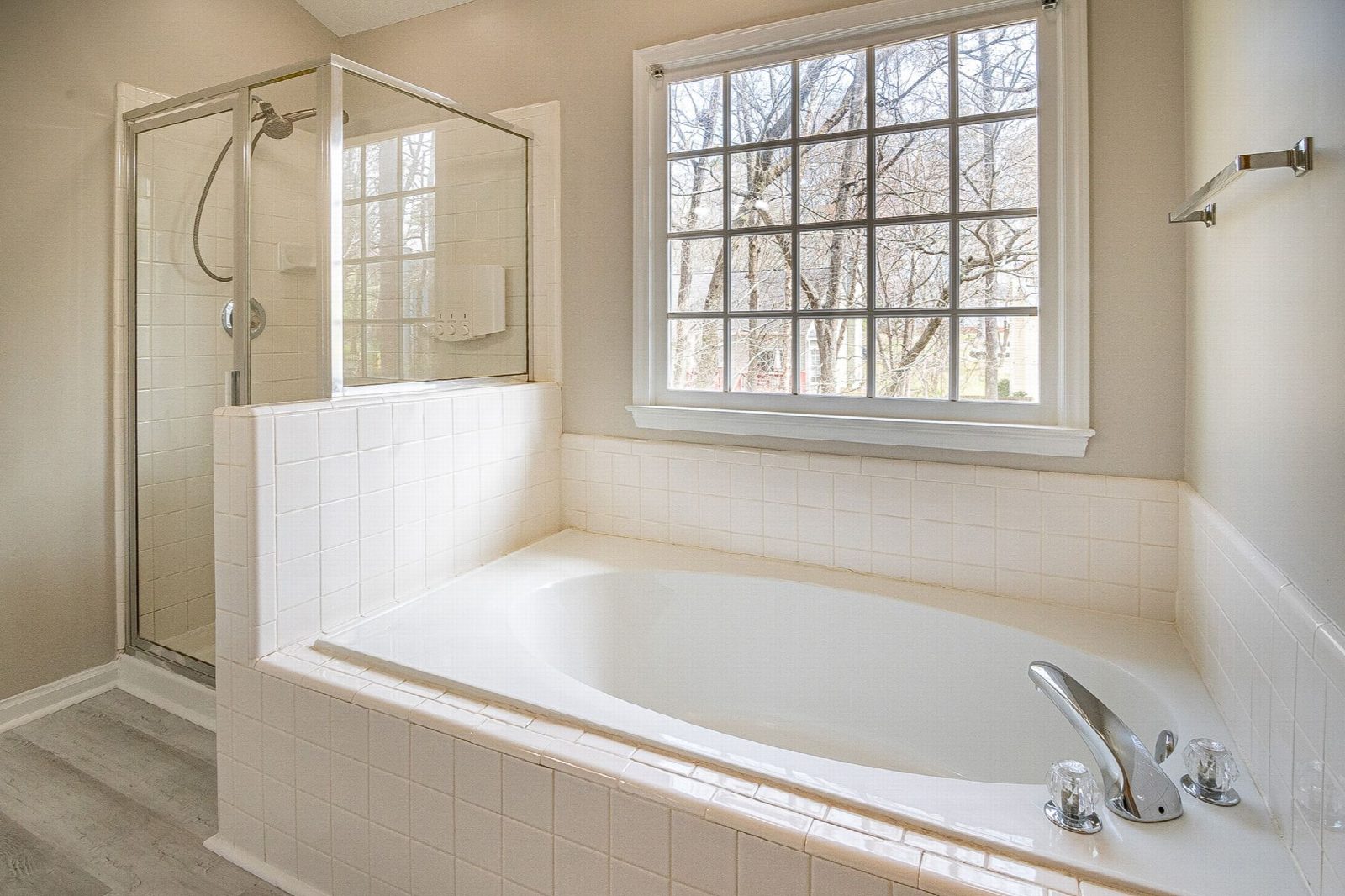
Cleaning is only half of it. The other half is giving the moisture somewhere to go:
- Run the extractor fan during the shower and for at least fifteen minutes after. Most fans are switched off the second the light goes off, which is exactly when they're needed.
- Open the window after a bath or shower, even a crack, and shut the bathroom door so the damp air doesn't drift into bedrooms.
- Squeegee the shower screen and tiles after use. It takes thirty seconds and removes most of the water before it can settle.
- Hang towels so air can get round them rather than bundled on a rail.
- Check the extractor grille. They clog with dust and stop pulling properly, and a blocked fan is doing almost nothing.
- Don't dry washing on a radiator in the bathroom with the door shut.
If the fan is noisy but the air isn't moving, hold a sheet of tissue against the grille. If it doesn't stick, the fan needs cleaning or replacing.
When a deep clean is the sensible answer
Sometimes the mould has been building for a while, or it's spread beyond the shower to the ceiling, window frames and behind the toilet. At that point it's a long, awkward job with a lot of scrubbing in tight spaces, and it's often faster to hand it over.
Our deep cleaning covers bathrooms and en suites properly: descaling showerheads, taps and tiles, scrubbing grout lines, cleaning behind and around the base of the toilet, and treating mould and soap scum rather than wiping over it. Shower screens get done both sides. Hard water is common right across Norfolk and Suffolk, so limescale and mould usually need tackling together, and we carry descaling treatments that are safe on chrome, ceramic and glass.
The same applies if you're handing keys back. Bathroom mould is one of the first things anyone looks at on a check-out inspection, which is why it's part of our end of tenancy cleaning too. If you're not sure which service fits your situation, have a look at our home cleaning options.
If the bathroom has got away from you, get in touch with CleanIt4u and tell us what you're dealing with, and we'll give you a realistic idea of what's involved.