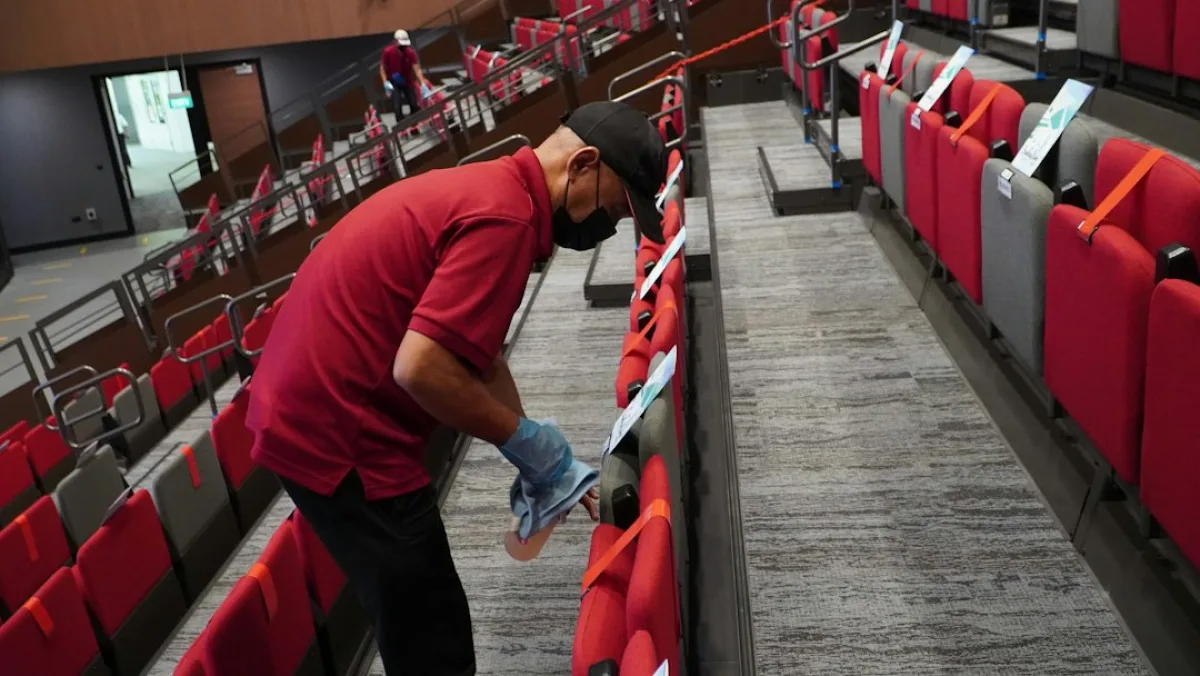
Eco-Friendly Cleaning Products and Practices for Commercial Spaces
Sophie Tillson · 20 Sep 2026
More businesses across Norfolk and Suffolk are thinking carefully about the products used on their premises. Whether you run a busy office, a hospitality venue, or a retail unit, the cleaning products and methods your team or cleaners use every day add up. Choosing greener options is not just good for the environment — it can also create a healthier working environment for your staff and customers.
In this article we share practical guidance on eco-friendly cleaning products, water-efficient methods, and the kinds of sustainable practices our team builds into everyday commercial cleaning work.
Why Sustainable Cleaning Matters for Business Premises
Commercial cleaning involves far more product volume and frequency than most people realise. Offices, warehouses, cafes, and shops are cleaned regularly, often daily, which means the cumulative effect of the products used is significant. Harsh chemicals, single-use plastic packaging, and excessive water use all have an impact — and business owners are increasingly looking to reduce that impact wherever they can.
Beyond environmental benefits, there are practical reasons to think carefully about what goes into your cleaning regime:
- Heavily fragranced or chemical-based products can cause irritation for staff with sensitivities or respiratory conditions.
- Some traditional cleaning chemicals require careful handling and storage, which adds complexity to day-to-day operations.
- Greener alternatives have improved significantly in recent years and are now capable of delivering a thorough clean across most commercial surfaces.
Our cleaners are experienced in working with a range of products and are happy to use environmentally preferred options where clients request them.
Choosing Greener Cleaning Products
Not all products marketed as eco-friendly are equal. When our team selects products for commercial use, we look for a few key indicators:
Biodegradable formulas
Products with biodegradable ingredients break down more easily once they enter the water system. This is particularly relevant for multi-surface sprays, floor cleaners, and washroom products that are rinsed away during use.
Concentrated solutions
Concentrated cleaning products that are diluted on-site tend to reduce plastic waste significantly. You get more cleaning power from each bottle, and there is less packaging to dispose of. Many of the products our team uses in Norfolk and Suffolk are supplied in concentrated form for exactly this reason.
Reduced or recyclable packaging
Look for suppliers who use recycled or recyclable packaging, or who offer refill schemes for regular commercial customers. Some cleaning product suppliers now collect empty containers for reuse, which reduces landfill waste considerably.
Fragrance-free or naturally fragranced options
Synthetic fragrances are among the more problematic ingredients in conventional cleaning products. Where possible, we opt for fragrance-free or naturally scented alternatives, particularly in enclosed office or hospitality spaces where poor ventilation can concentrate airborne chemicals.
Sustainable Cleaning Methods and Equipment
Products are only part of the picture. The methods and equipment used also have a significant effect on how sustainable a cleaning operation is.
Microfibre cloths and mop heads
Microfibre materials are one of the most effective tools available to commercial cleaners. They require far less product than traditional cloths and can be laundered and reused hundreds of times. Our team uses microfibre cloths and mop heads as standard, which reduces both chemical use and disposable waste.
Water-efficient mopping systems
Traditional mop-and-bucket methods can use a surprising amount of water. Flat mop systems, spray mops, and controlled dispensing equipment use water more efficiently and also dry faster, which reduces slip risks on commercial floors.
Steam cleaning
Steam cleaning is an effective option for sanitising hard surfaces, grout, and certain types of upholstery without the need for chemical products. It uses heat to kill bacteria and lift grime, and the only consumable is water. Our team can incorporate steam cleaning into deep clean visits where it is appropriate for the surfaces involved.
Colour-coded equipment
This is not just a hygiene measure — it also reduces waste. By using colour-coded cloths and mop heads for different areas, we avoid cross-contamination and extend the usable life of equipment by keeping it in the right conditions.
Building Sustainable Habits Into Your Regular Clean
If your business has regular cleaning visits, there are steps you and your cleaning team can take to make those visits more sustainable over time.
- Review your product inventory. If you supply your own cleaning products, take stock of what you are using and consider switching to concentrated, biodegradable alternatives gradually as products run out.
- Reduce single-use consumables. Paper towels in washrooms and kitchens are a significant source of waste. Cloth roller towel systems or hand dryers can reduce this, and our cleaners can maintain these systems as part of a regular clean.
- Keep dispensers topped up efficiently. Rather than discarding and replacing partially empty dispensers, our team works to consolidate and refill where possible to reduce waste.
- Talk to our team about your priorities. If sustainability is important to your business, let us know. We can adapt our approach, product choices, and methods to align with your goals.
One-Off and Deep Cleans With a Greener Approach
Sustainable practices are not limited to regular cleaning contracts. When you book a one-off commercial clean with us — whether for a post-event tidy, a pre-opening deep clean, or a seasonal refresh — our team brings the same commitment to product choice and method.
For large-scale deep cleaning projects, we plan our work carefully to avoid unnecessary product waste and ensure that any materials used are disposed of responsibly. If you have a specific request around product types or methods, we are always happy to discuss this in advance.
Frequently Asked Questions About Eco-Friendly Commercial Cleaning
Are eco-friendly cleaning products as effective as conventional ones?
In most cases, yes. For general surface cleaning, sanitising, and floor care, modern biodegradable and concentrated products perform very well. There are some specialist tasks — such as heavy grease removal in commercial kitchens — where stronger products may still be required, but these are used selectively and with care.
Can I request specific products or brands?
Yes. If your business already uses certain eco-certified or preferred products, our cleaners are happy to work with them. You can also ask us about the products we use and we will be transparent about what goes into our cleaning kit.
Do eco-friendly methods take longer?
Not significantly. Microfibre and steam methods are efficient, and concentrated products are quick to prepare. In some cases, water-efficient methods actually speed up the process because surfaces dry faster.
If you would like to know more about how our team works, or to book a commercial clean for your Norfolk or Suffolk business, visit our frequently asked questions page or browse our full range of services to find the right option for your premises.
Related advice
What to Clean First When Taking Over a Commercial Property
Taking over a commercial property is an exciting step, but before your team moves in or your customers walk through the door, the building needs a thorough clean. Here is where to start and how to get it right.
19 Sep 2026
Read More
School and Training Centre Cleaning: How to Keep Your Premises in Top Condition
Schools and training centres need consistent, thorough cleaning to stay hygienic and welcoming. Here is how our team approaches these busy, high-footfall environments across Norfolk and Suffolk.
18 Sep 2026
Read More
Cleaning a Rental Property When You Have Pets: A Room-by-Room Guide
Moving out of a rental with pets takes extra preparation. Our room-by-room guide covers everything you need to tackle pet hair, odours, and marks before your landlord's final inspection.
17 Sep 2026
Read More