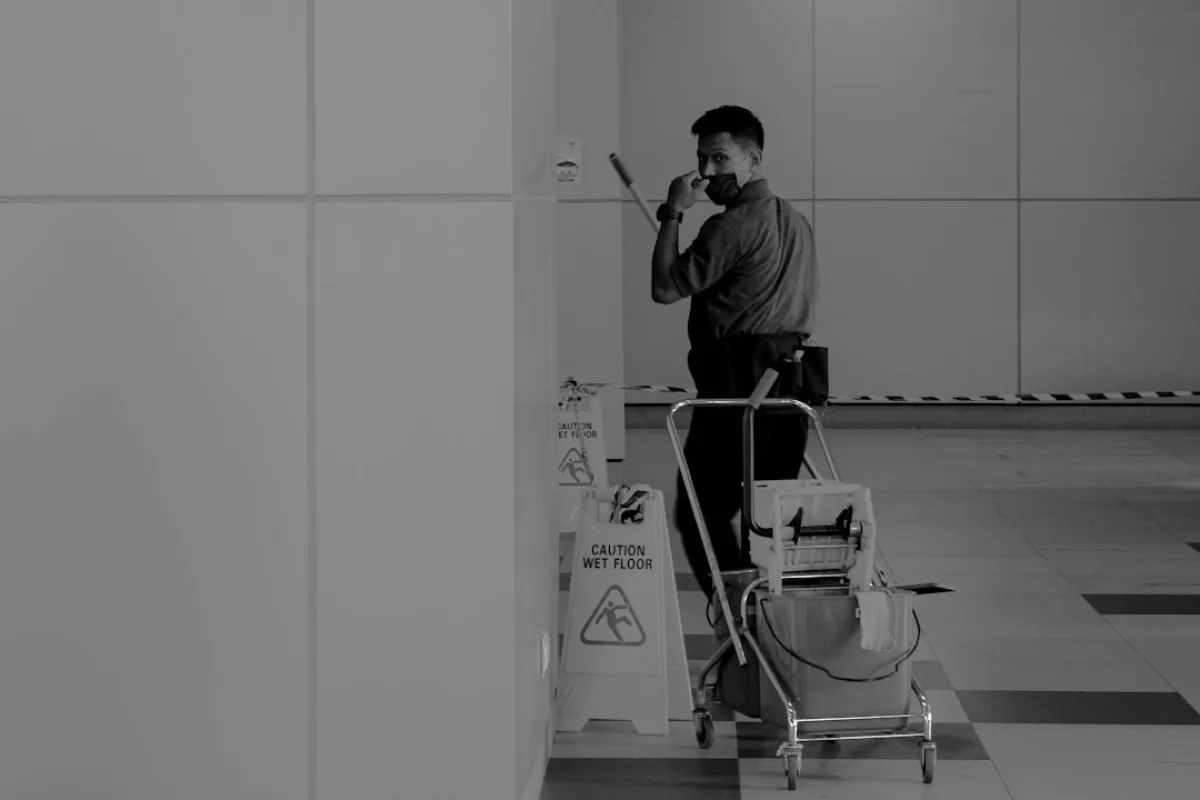
How to Keep Your Retail Shop Clean and Welcoming All Year Round
Sophie Tillson · 6 Aug 2026
First impressions matter in retail. When a customer steps through your door, the cleanliness of your shop tells them something about how you value their experience. Dusty shelves, sticky floors, or smeared windows can send people straight back out again, regardless of how good your products are.
Our team works with retail businesses across Norfolk and Suffolk, helping them maintain clean, welcoming spaces day in and day out. Whether you run a small independent boutique or manage a larger store, the principles are the same: consistent upkeep, thorough periodic deep cleaning, and attention to the areas customers actually notice.
In this guide, we share practical advice to help you build and maintain a cleaning routine that works for your retail space.
The Basics: What Your Daily Retail Cleaning Routine Should Cover
Daily cleaning forms the backbone of any well-maintained retail premises. The specific tasks will vary depending on the type of shop you run and the footfall you receive, but most retail spaces benefit from covering the following every day.
Floors
Retail floors take a real battering, especially during busy periods or in wet weather. Sweeping, vacuuming, or mopping should happen at least once a day, and more frequently in entranceways where mud, water, and general grime are tracked in. Hard floors benefit from a damp mop using a diluted floor cleaner, while carpeted areas need regular vacuuming to prevent debris from becoming embedded in the fibres.
Entrances and glass doors
Fingerprints and smears on glass doors or windows are one of the first things customers notice. A quick wipe down with a glass cleaner and a lint-free cloth each morning sets the right tone before you open. Pay particular attention to door handles and push plates, which are high-contact surfaces and should be disinfected regularly.
Checkout areas and counters
Till points, counters, and card machines are touched constantly throughout the day. Wiping these down with an appropriate surface cleaner each morning and again at close is good practice, both for hygiene and appearance.
Staff areas and toilets
If your premises include a staff room or customer toilets, these need daily attention too. Sanitising surfaces, replenishing soap and hand towels, and cleaning toilet bowls and sinks should be standard parts of your daily routine.
Seasonal and Periodic Deep Cleaning for Retail Premises
Daily cleaning keeps things tidy, but it cannot address the build-up that accumulates over weeks and months. A seasonal or periodic deep clean fills that gap, tackling areas that daily routines simply cannot reach.
Our commercial deep cleaning service is designed for exactly this kind of work. Our cleaners go beyond the surface to clean behind fixtures, above shelving units, inside display cases, and along skirting boards and coving that might not have been touched in months. For retail businesses, this kind of thorough clean is particularly valuable ahead of busy trading periods such as Christmas, Easter, or summer sales, when footfall is at its highest.
If you run a shop in Norfolk or Suffolk and you are looking for a reliable commercial deep clean in Norfolk or a commercial deep clean in Suffolk, our team can assess your space and carry out the work at a time that suits your trading hours.
What a retail deep clean typically includes
- Cleaning high-level surfaces including shelving tops, light fittings, and ceiling fans
- Moving and cleaning behind heavy display units and fixtures
- Deep scrubbing of hard floors, including grout lines where applicable
- Steam cleaning or shampooing of carpeted areas
- Thorough cleaning of fitting rooms, storage areas, and stockrooms
- Degreasing and sanitising kitchen or staff room appliances
- Descaling taps and sanitising bathroom and welfare facilities
Managing Cleaning Around Trading Hours
One of the most common questions we hear from retail clients is how to schedule cleaning without disrupting customers or staff. It is a fair concern, and the answer usually involves a combination of timing and planning.
For most shops, early morning before opening or early evening after closing works well for the bulk of cleaning tasks. This means your customers never see cleaning in progress, and your staff are not working around mops and buckets.
If your store operates extended hours or is open seven days a week, a one-off commercial clean outside your busiest trading window can help you stay on top of the heavier tasks without impacting the customer experience. Some retailers also find it useful to rotate which areas receive deeper attention each week, spreading the workload rather than trying to do everything at once.
A few practical scheduling tips
- Carry out floor mopping at the end of the trading day so surfaces are dry by the time you open again.
- Schedule window and glass cleaning early in the morning when light is good and before customer traffic begins.
- Plan stockroom and staff area cleans around delivery schedules to avoid congestion.
- If you have fitting rooms, check and clean them throughout the day, not just at opening and close.
Cleaning Products and Equipment Worth Investing In
Having the right tools makes a noticeable difference to the quality and speed of your cleaning. Many retail businesses underestimate how much a good-quality microfibre cloth outperforms a standard cleaning cloth, or how a flat mop system can cut mopping time significantly compared to a traditional bucket and string mop.
Here are a few product and equipment choices worth considering for a retail environment.
Microfibre cloths
Microfibre cloths lift dust and bacteria from surfaces more effectively than standard cloths, and they can be laundered and reused many times. Colour-coding cloths by area (for example, blue for general surfaces, red for toilets) helps maintain good hygiene practice across your team.
Flat mop systems
A flat mop with disposable or washable pads covers floor area quickly and is easier to manoeuvre around display units and shelving than a traditional mop. Many retail businesses find they can reduce mopping time considerably once they switch.
Trigger spray bottles
Pre-mixed cleaning solutions in clearly labelled trigger bottles are efficient for counter and surface wiping. Using the right product for each surface type (glass cleaner for windows, antibacterial spray for high-contact areas) gives better results than a single all-purpose product used everywhere.
A vacuum with a HEPA filter
If your shop has carpeted areas or soft furnishings, a vacuum fitted with a HEPA filter traps fine particles rather than redistributing them into the air. This is particularly useful in smaller retail spaces with limited ventilation.
When to Bring in Professional Commercial Cleaners
Some retail businesses manage their cleaning entirely in-house, while others rely on professional cleaners for all or part of the work. Many find a combination works best: staff handle day-to-day tidying and basic cleaning, while our team comes in for the more intensive work on a regular or periodic basis.
If you have recently taken on new retail premises, are preparing for a refit, or want to reset standards ahead of a busy trading period, a professional clean can make a significant difference. Our commercial cleaning services cover a wide range of retail environments across Norfolk and Suffolk, and we work around your schedule to keep disruption to a minimum.
If you would like to know more about the areas we serve or the services we offer, our frequently asked questions page is a good starting point, or you can get in touch directly and we will talk through what your shop needs.
Our advice: do not wait until standards slip before reviewing your cleaning routine. A little consistency goes a long way in retail, and customers notice a well-kept shop even when they cannot put their finger on exactly why it feels right.
Related advice
Eco-Friendly Cleaning Products and Practices for Commercial Spaces
Switching to greener cleaning products and methods does not mean sacrificing results. Here is how our team helps businesses in Norfolk and Suffolk clean effectively while reducing their environmental impact.
20 Sep 2026
Read More
What to Clean First When Taking Over a Commercial Property
Taking over a commercial property is an exciting step, but before your team moves in or your customers walk through the door, the building needs a thorough clean. Here is where to start and how to get it right.
19 Sep 2026
Read More
School and Training Centre Cleaning: How to Keep Your Premises in Top Condition
Schools and training centres need consistent, thorough cleaning to stay hygienic and welcoming. Here is how our team approaches these busy, high-footfall environments across Norfolk and Suffolk.
18 Sep 2026
Read More