Running a business means juggling a lot of priorities, and cleaning can sometimes feel like something you set up once and forget about. But without a way to measure how well your premises are being kept, it is easy for standards to slip without anyone noticing until a problem is already visible — or worse, until a customer or member of staff points it out.
A cleaning audit is simply a structured way of checking that the right tasks are being done to the right standard, at the right frequency. Whether you manage a busy office, a retail space, or a commercial property in Norfolk or Suffolk, putting a proper audit process in place gives you confidence that your cleaning is working as it should.
In this article, we walk you through what a cleaning audit looks like, what to measure, and how our team can help you maintain high hygiene standards day to day.
What Is a Cleaning Audit?
A cleaning audit is a formal review of how well your premises are being cleaned. It involves inspecting specific areas against a set of agreed standards, recording what is found, and identifying anything that needs attention or improvement.
Audits are not about catching anyone out. They are a practical tool for making sure that cleaning activity is consistent, that nothing important is being missed, and that the environment you provide for staff, customers, or visitors is genuinely clean and hygienic.
They can be carried out at any frequency — weekly, monthly, or after specific events such as a deep clean or a busy period in your business calendar.
What to Include in a Cleaning Audit Checklist
The areas you inspect will depend on your type of premises, but a thorough audit for most commercial spaces should cover the following.
High-Touch Surfaces
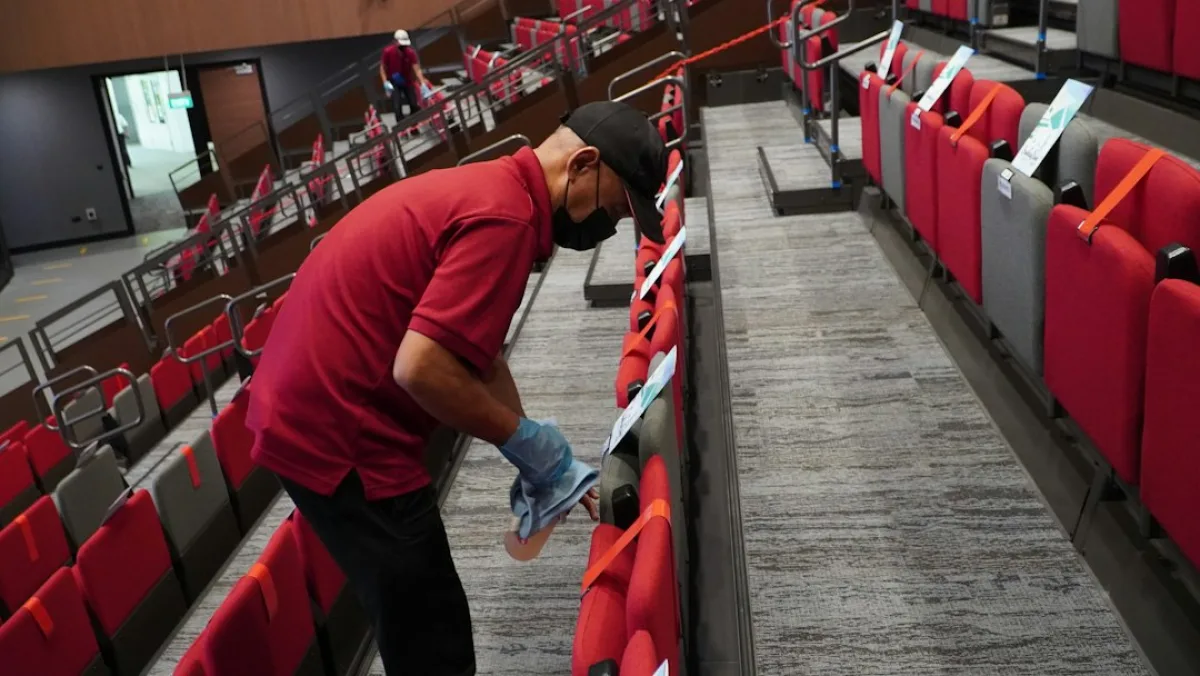
Door handles, light switches, lift buttons, handrails, and shared equipment such as printers or point-of-sale terminals are touched dozens of times each day. These should be checked for visible marks, grease, or residue and wiped down regularly with an appropriate product.
Floors and Floor Coverings
Hard floors should be free from dust, scuff marks, and sticky patches. Carpeted areas should be vacuumed thoroughly, with particular attention to high-traffic routes and areas near entry points where dirt is brought in from outside.
Kitchens and Welfare Facilities
Communal kitchens, staff break rooms, and welfare facilities need to be assessed for cleanliness of surfaces, appliances, sinks, and bins. Odour is also worth noting — a clean space should smell fresh and neutral.
Toilets and Washrooms
Toilet cubicles, basins, taps, soap dispensers, hand dryers, and mirrors all need to be inspected individually. Consumables such as soap, paper towels, and toilet roll should be checked and restocked as part of a routine clean.
Workstations and Common Areas
Desks, chairs, meeting room tables, reception counters, and waiting areas should all be included. Dust accumulation on surfaces and underneath furniture is a common area where standards slip.
Windows and Glass Partitions
Internal glass surfaces and partition panels collect fingerprints quickly and can make a space look unkempt even when everything else is clean.
Bins and Waste Removal
Check that bins have been emptied, that liners are in place, and that recycling is being sorted correctly. Overflowing or odorous bins are one of the most common complaints in workplaces.
How to Score and Record Your Audit
The most straightforward approach is to work through your checklist area by area and score each item. A simple three-point scale works well for most businesses:
- Satisfactory — the area meets the expected standard
- Needs attention — the area is acceptable but could be improved
- Unsatisfactory — the area has not been cleaned to the required standard and needs immediate action
Keep a record of each audit, including the date, who carried it out, and what was found. Over time, this gives you a useful picture of whether standards are improving, staying consistent, or beginning to decline in particular areas.
If you are working with our team on a regular office cleaning programme, sharing your audit findings with us means we can adjust the focus of our visits and make sure problem areas receive extra attention.
When to Schedule an Audit
For most businesses, a monthly audit is enough to stay on top of standards. However, there are specific points in the year when an audit is particularly useful:
- After a commercial deep clean, to confirm the work has been completed to the standard agreed
- Before a business opens to the public for the first time, or reopens after a refurbishment
- After a busy trading period such as a seasonal rush, a large event, or a period of high footfall
- When you are reviewing your cleaning arrangements or considering changes to your cleaning schedule
Common Problems Audits Tend to Uncover
In our experience cleaning commercial properties across Norfolk and Suffolk, certain issues come up repeatedly when businesses start auditing properly for the first time.
Missed Areas
It is common to find that certain spots have been consistently overlooked — the top of door frames, skirting boards, vents, behind furniture, and underneath desk pedestals are typical examples. A checklist helps make sure nothing is forgotten.
Inconsistent Frequency
Some tasks that should be done daily are only being done a couple of times a week, while other tasks that only need attention once a fortnight are being done too often. An audit helps match effort to actual need.
Product and Equipment Issues
Sometimes the right product is not being used for a particular surface, or equipment such as mops and cloths are not being changed or sanitised frequently enough. This can mean surfaces look clean but are not properly hygienic.
Consumable Shortfalls
Running out of soap, sanitiser, or hand towels in washrooms or kitchens is a straightforward problem to fix once it is identified — but it reflects poorly on the business until it is picked up.
How Our Team Can Help
If you are not sure where to start, or if your current cleaning arrangements are not quite hitting the standards you need, we are happy to talk through what a cleaning programme for your premises could look like.
We provide commercial cleaning services across Norfolk and Suffolk, from regular scheduled visits to one-off cleans and deep cleans. Our cleaners work to clear, agreed standards, and we take quality seriously on every job we take on.
If you want to find out which areas we cover or have a question about getting started, our frequently asked questions page is a good place to begin, or you are welcome to get in touch with us directly.
Putting a proper audit process in place does not need to be complicated. Even a straightforward monthly walkthrough with a clear checklist will give you far more confidence in the cleanliness of your premises — and help you act quickly when something needs to change.