More businesses across Norfolk and Suffolk are asking us about sustainable cleaning. It comes up in conversations with office managers, retail owners, hospitality venues, and property landlords alike. The question is usually some version of the same thing: can we clean to a high standard without leaving a heavy environmental footprint?
The short answer is yes. Sustainable cleaning is not about cutting corners or accepting lower results. It is about making smarter choices with products, equipment, processes, and scheduling. Our team has put together this guide to help business owners understand what sustainable commercial cleaning actually looks like in practice.
Why Sustainable Cleaning Matters for Businesses
The cleaning industry has traditionally relied on chemical-heavy products, single-use materials, and high water consumption. For a business that is cleaned daily or several times a week, those habits add up quickly. The environmental impact is real, and so is the cost.
Businesses are also increasingly scrutinised by clients, staff, and the public on their environmental credentials. Demonstrating that your premises are maintained in a responsible way is a straightforward and visible way to show that your values extend into day-to-day operations.
Beyond reputation, there are practical benefits. Eco-friendly cleaning products tend to be gentler on surfaces, reducing wear over time. Concentrated formulas used correctly can cut down on packaging waste and storage requirements. Microfibre cloths and mop heads last significantly longer than disposable alternatives. These changes often reduce overall costs once they become routine.
Choosing the Right Cleaning Products
Product choice is one of the most immediate ways to make commercial cleaning more sustainable. Our cleaners use products that are assessed for environmental impact, and we actively look for options that perform well without relying on harsh chemistry.
What to look for in eco-friendly commercial cleaning products
- Biodegradable formulations that break down naturally rather than persisting in waterways
- Concentrated products that reduce packaging and transport emissions
- Fragrance-free or naturally scented options that reduce indoor air pollutants
- Products with recognised environmental accreditations, such as EU Ecolabel or similar UK-recognised certifications
- Refillable or bulk-buy packaging to cut down on plastic waste
It is worth noting that not every surface or situation calls for a specialist product. A surprising number of everyday cleaning tasks in commercial premises can be handled effectively with simple, low-impact solutions. Our team assesses each environment and uses products appropriate to the task rather than defaulting to the strongest available option.
Disinfection without excess
One question we are often asked is how to maintain proper hygiene standards while reducing chemical use. The answer lies in targeting. High-touch surfaces such as door handles, light switches, shared equipment, and communal kitchen areas genuinely benefit from regular disinfection. Lower-traffic areas often do not need the same treatment on the same schedule. A thoughtful approach means disinfecting where it counts rather than applying heavy products indiscriminately across entire premises.
Equipment and Reusable Materials
The tools used in commercial cleaning have a significant bearing on sustainability. Single-use disposable wipes, paper towels, and plastic-backed scrubbing pads all generate waste that accumulates quickly across a busy business premises.
Microfibre: the sustainable cleaning staple
Microfibre cloths and mop heads are among the most effective and sustainable options available for commercial cleaning. They pick up bacteria and particles mechanically, which means they can clean effectively with water alone in many situations. They are washable and durable, lasting through hundreds of cycles before needing replacement.
Our cleaners use colour-coded microfibre systems to prevent cross-contamination between different areas of a premises. This is particularly important in environments such as offices with shared kitchens, hospitality venues, or any workplace with separate hygiene zones.
Low-water and steam cleaning
Where appropriate, steam cleaning is an excellent sustainable option for commercial premises. It uses heat rather than chemicals to sanitise surfaces, and the water consumption is lower than traditional wet mopping. It is particularly useful for hard flooring, grout lines, and upholstery, and it eliminates the need for chemical residue on surfaces.
Modern commercial vacuum cleaners with HEPA filtration also contribute to healthier indoor air quality, removing fine particles and allergens without releasing them back into the environment.
Smarter Scheduling and Reducing Waste
Sustainability is not only about what products and equipment are used. It is also about how cleaning is scheduled and managed. Unnecessary visits, excessive product use, and poor planning all add to the environmental footprint of keeping a commercial premises clean.
Regular cleaning versus periodic deep cleans
A well-maintained premises that receives consistent, regular attention requires less intensive intervention over time. Our regular office cleaning service is designed around exactly this principle: steady, thorough maintenance that prevents the build-up of grime and reduces the need for heavy-duty chemical treatments.
That said, periodic commercial deep cleaning is still an important part of any sustainable approach. Seasonal deep cleans, post-event cleans, and end-of-tenancy cleans allow for thorough attention to areas that fall outside routine maintenance. When these are planned in advance and carried out properly, they reduce the likelihood of reactive, intensive cleans that consume more product and time.
Reducing single-use consumables on site
One practical step businesses can take is reviewing the consumables used in toilets, kitchens, and communal areas. Moving from paper towels to air hand dryers or reusable cotton roll systems, switching to refillable soap dispensers, and reducing the number of individually wrapped products all help cut down on waste generated by the day-to-day cleaning and hygiene routine.
Our team is happy to advise on which consumable choices make sense for different types of commercial premises. A busy reception area has different needs to a small back-office kitchen, and there is rarely a one-size-fits-all answer.
Sustainable Cleaning in Different Commercial Settings
The principles of sustainable cleaning apply across all business types, but the way they are implemented varies depending on the setting. Here is how we approach sustainability in some of the most common commercial environments we work in across Norfolk and Suffolk.
Offices and workplaces
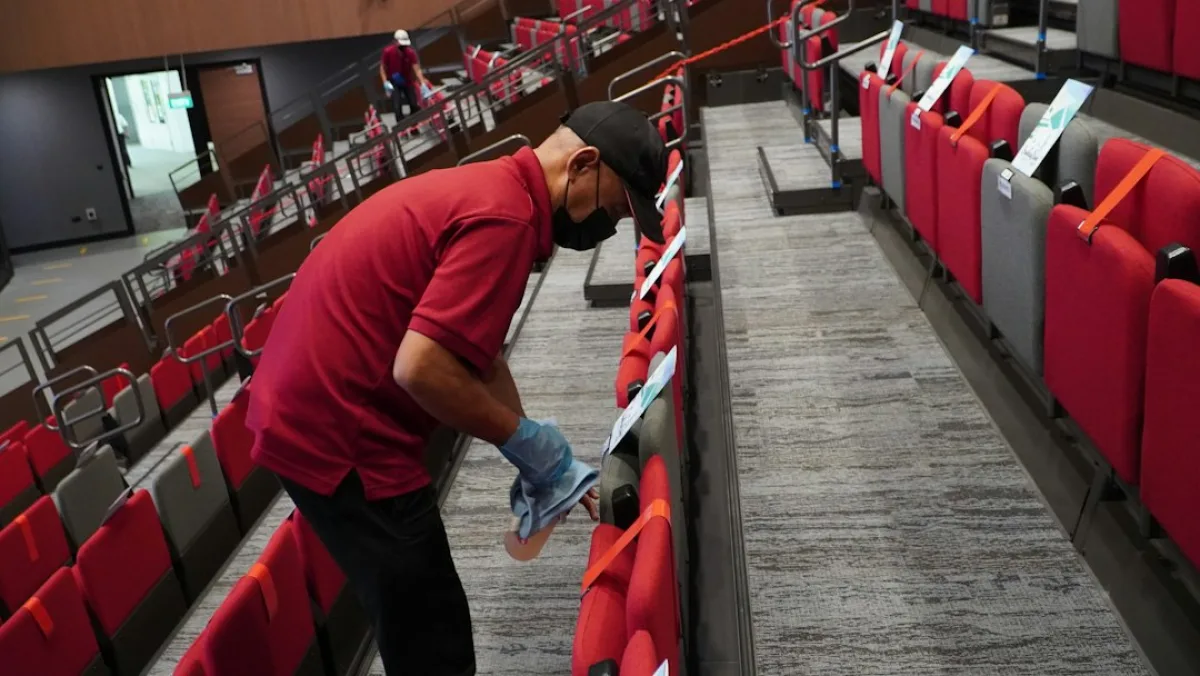
Offices tend to generate a consistent volume of cleaning work with relatively predictable needs. Sustainable cleaning in this environment focuses on product selection, microfibre use, and scheduled visits timed to avoid unnecessary travel. Reducing the frequency of whole-office disinfection in favour of targeted high-touch cleaning is both effective and lower impact.
Retail venues
Retail premises face particular challenges around footfall and visible cleanliness. Customer-facing areas need to look presentable at all times, which can create pressure to over-clean. In practice, a well-planned routine using the right products and equipment keeps retail spaces looking their best without excessive resource use. Entrance matting, for example, is a simple and effective way to reduce the volume of dirt tracked into a premises, lowering the cleaning burden overall.
Hospitality venues
Kitchens, bars, and dining areas require careful cleaning with appropriate products, but there is still room for sustainable choices. Concentrated degreasers, reusable microfibre systems, and careful scheduling around operational hours all contribute to a more responsible approach. We work with hospitality businesses to plan cleans around their opening times, reducing disruption while ensuring the premises meets hygiene expectations.
Pre-opening and post-event cleans
One-off commercial cleans, whether before a business opens or after a significant event, are an ideal opportunity to establish sustainable habits from the outset. Our one-off commercial cleaning service covers these situations, and we bring the same approach to product and equipment choice regardless of whether it is a single visit or an ongoing contract.
Working With a Commercial Cleaning Team That Shares Your Values
If sustainability matters to your business, it makes sense to work with a cleaning team that takes the same approach seriously. When speaking to any commercial cleaning provider, it is worth asking directly about the products they use, how they train their staff, and what steps they take to reduce waste.
Our team covers a wide range of business premises across the region. Whether you are based in Norwich, Ipswich, or anywhere else across our service areas in Norfolk and Suffolk, we are happy to talk through how we approach sustainable cleaning for your type of premises.
You can also read through our frequently asked questions for more detail on how we work, or browse our full range of commercial cleaning services to see what might suit your business.
Getting Started With More Sustainable Cleaning
Making your business cleaning more sustainable does not have to mean a complete overhaul. In many cases, a few targeted changes can make a meaningful difference without disrupting your routine or budget.
- Review the products currently used on your premises and ask whether greener alternatives exist
- Switch from disposable wipes and paper towels to washable microfibre where practical
- Consider whether your current cleaning schedule is well-matched to your actual needs, or whether it could be adjusted
- Talk to your cleaning team about targeted disinfection rather than blanket chemical application
- Plan seasonal deep cleans in advance to avoid reactive, resource-intensive interventions
Sustainable commercial cleaning is a direction rather than a destination. Small, consistent improvements add up over time, and businesses that make a genuine effort tend to find it becomes the natural way of working rather than an extra consideration.
If you would like to talk to our team about cleaning your business premises in Norfolk or Suffolk with sustainability in mind, we are always happy to hear from you.